
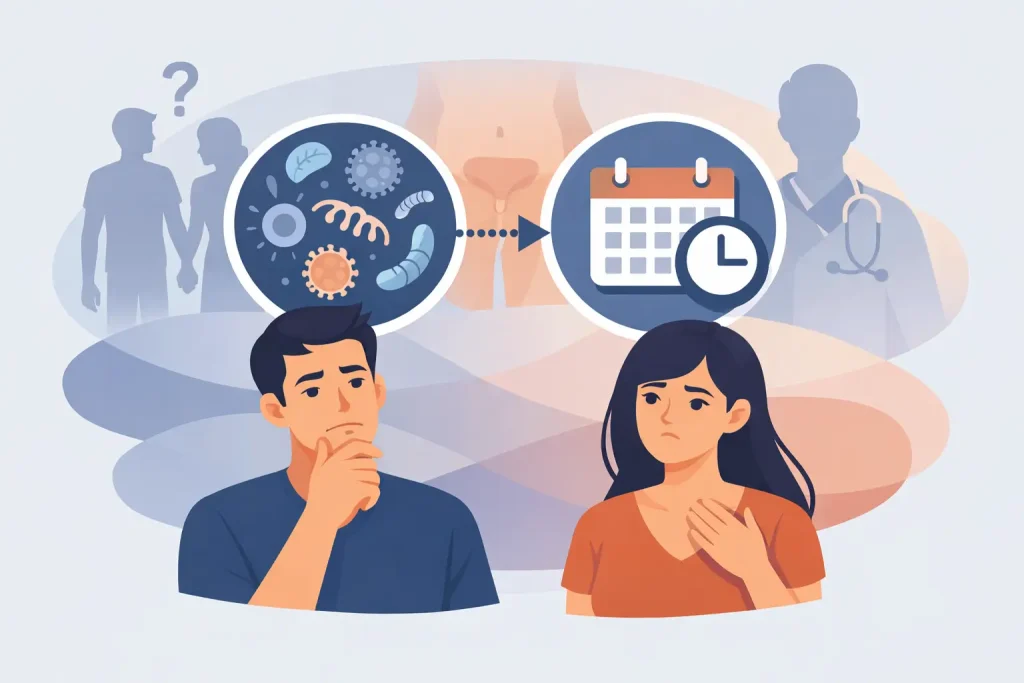
A sexual encounter may feel like it is behind you, then a rash, discharge, sore throat or burning sensation appears days or weeks later. Naturally, the question is: can STD symptoms appear later? Yes. Many sexually transmitted infections have an incubation period, meaning symptoms may develop after a delay. Others cause no noticeable symptoms at all, even while the infection can still be passed on.
The timing alone cannot confirm what is happening. A new symptom may be related to an STI, but it could also have another cause such as irritation, thrush, a urinary infection, a skin condition or a non-sexual viral illness. The safest way to replace worry with an answer is confidential testing and a clinician-led assessment.
Can STD Symptoms Appear Later After Exposure?
Yes. Symptoms can appear later because different infections behave differently in the body. Some may cause symptoms within a few days, while others can take weeks, months or longer. In some cases, symptoms settle without treatment, but the infection remains present.
This is why feeling well after sex does not always rule out an STI. It is also why testing immediately after a possible exposure may not give a final answer. Tests need enough time to detect an infection reliably. This is known as the window period.
A doctor will consider the date of exposure, the type of sexual contact, whether protection was used, your symptoms and any previous test results. That context matters more than trying to match one symptom to one infection through an online search.
Typical Timing for Common STIs
There is no single timeline for all STIs. The following ranges are general guides, not a diagnosis.
Chlamydia and gonorrhoea
Chlamydia and gonorrhoea can cause burning when passing urine, unusual discharge, pelvic discomfort, testicular pain or bleeding between periods. When symptoms occur, they often begin within days to a few weeks. However, many people have no symptoms, particularly with chlamydia.
Both infections can also affect the throat or rectum after oral or anal sex. Throat and rectal infections may have little or no discomfort, so a urine test alone may not be enough. The test sites should match the sexual contact you have had.
Herpes
Genital herpes may cause tingling, soreness, small blisters or ulcers. A first episode commonly appears within a few days to around two weeks, but symptoms can be mild, mistaken for another skin issue, or noticed much later. Some people do not recognise their first outbreak at all.
If there are fresh blisters, sores or ulcers, a swab from the area is usually more useful than a blood test for assessing a current outbreak. Do not apply creams or attempt to pop lesions before assessment.
Syphilis
Syphilis may begin with a painless sore at the point of contact, often around three weeks after exposure, although timing varies. The sore can be hidden inside the mouth, vagina or rectum and may heal by itself. That does not mean the infection has gone away.
Later stages can involve a body rash, swollen glands, fever, patchy hair loss or other symptoms. Because syphilis can be silent between stages, blood testing is essential when there has been a relevant risk.
HIV
Some people develop a flu-like illness two to six weeks after HIV exposure, with fever, sore throat, rash, tiredness or swollen glands. These symptoms are non-specific and overlap with many common illnesses. Others have no early symptoms.
HIV tests have different window periods depending on the test used. A clinician can advise whether you need an initial test, a repeat test, or both. If a possible high-risk exposure happened within the last 72 hours, seek urgent medical advice immediately. Post-exposure treatment may be time-sensitive.
HPV and genital warts
Genital warts linked to certain strains of HPV can appear weeks, months or sometimes longer after contact. This makes it difficult to know exactly when HPV was acquired or from whom. Small bumps, growths or changes in genital skin should be examined rather than self-diagnosed.
Why Symptoms Can Be Delayed or Seem New
A delayed symptom does not always mean a recent infection. Some infections remain quiet before becoming noticeable. Others produce mild signs that are only recognised in hindsight. Stress, illness, friction during sex and changes in immunity can also make a previously unnoticed skin or genital concern more apparent.
It is also possible to have an infection without symptoms and then develop a different, unrelated condition. For example, discomfort after sex could be caused by a urinary tract infection, bacterial vaginosis, thrush, dermatitis or shaving irritation. This is why treatment should not be guessed from symptoms alone.
Avoid taking leftover antibiotics or buying medication based only on an online image search. The wrong medicine can delay proper diagnosis, affect test results and allow an infection to continue.
When Should You Get Tested?
Testing is sensible after unprotected sex, a condom break, sex with a new or multiple partners, contact with a partner diagnosed with an STI, or any new genital, urinary, throat or rectal symptom. You do not need to wait for symptoms to take sexual health seriously.
If the contact was recent, a doctor may recommend testing now and repeating selected tests after the appropriate window period. This is not a sign that the first test has failed. It is the correct way to account for how long the body takes to produce detectable signs of some infections.
Until you have clarity, it is sensible to avoid sex or use condoms and barriers consistently. If you have symptoms such as sores, discharge or pain, avoid sexual contact until you have been assessed. This protects you and reduces the chance of passing an infection to a partner.
Symptoms That Need Prompt Assessment
Book a confidential consultation promptly if you notice genital sores or blisters, unusual discharge, pain or burning when urinating, a new rash, testicular swelling or pain, pelvic pain, bleeding after sex, or rectal pain or discharge. These symptoms are treatable causes for concern, but early assessment is preferable.
Seek urgent medical care for severe lower abdominal or pelvic pain, fever with genital symptoms, a painful swollen testicle, difficulty passing urine, or a possible recent HIV exposure within 72 hours.
A Private Way to Get a Clear Answer
Concern about an STI can feel isolating, especially when you are unsure how long symptoms have been present. A private consultation should be straightforward and non-judgemental. The aim is not to make assumptions about you or your partner. It is to identify the right tests, interpret them at the right time and give clear next steps.
At Klinik Bangsar South, patients can discuss symptoms and exposure concerns discreetly with experienced clinicians, with appropriate screening selected according to their situation. Rapid testing and specialist interpretation can help prevent the uncertainty of testing too early, testing the wrong site, or misunderstanding a result.
You do not need to wait for a symptom to become more obvious or painful before seeking advice. If something has changed, or if a past encounter is still on your mind, a confidential sexual health assessment can give you the certainty needed to look after yourself and your partner.