
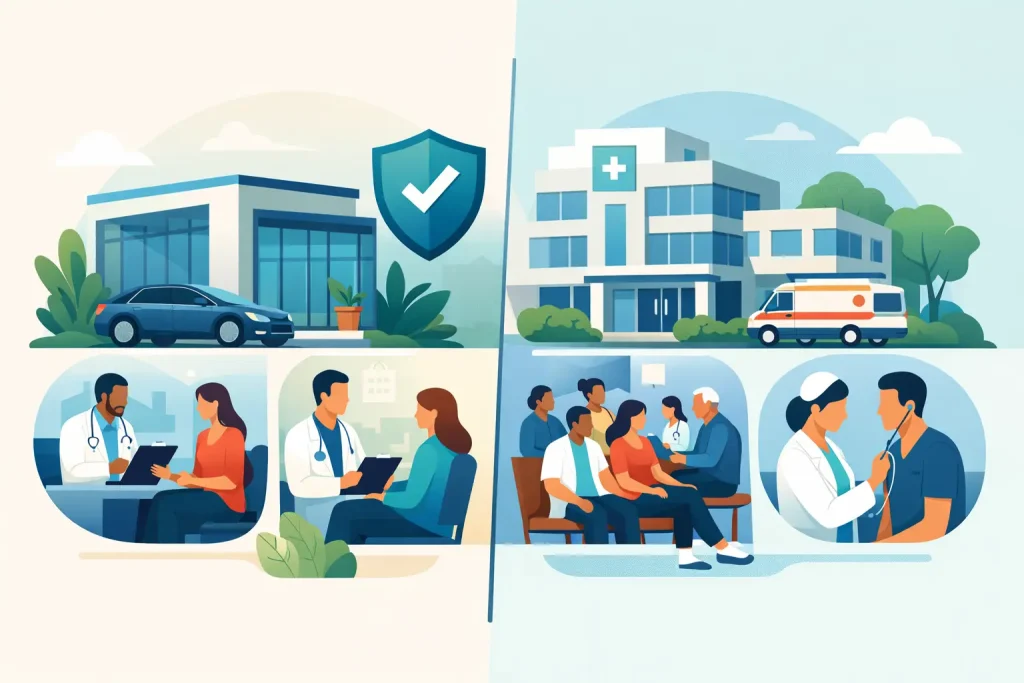
A recent sexual encounter can leave you wanting answers quickly, without explaining personal details in a busy waiting room. When comparing a private STD clinic vs public clinic, the right choice is not simply about price. It is about how soon you need to be seen, the level of privacy you want, which tests are appropriate, and whether you need clear medical guidance after the result.
Both private and public services have an important role in sexual health care. The best option depends on your symptoms, exposure, budget and urgency. What matters most is that you get medically appropriate testing and do not delay treatment where it is needed.
Private STD clinic vs public clinic: key differences
A public clinic or government hospital may offer lower-cost or subsidised sexual health services. For many people, this is a valuable and appropriate route, especially where there is no immediate concern and waiting for an appointment is manageable. Services, testing availability and referral procedures can vary between facilities.
A private STD clinic is a paid service designed around quicker access, discreet attendance and individual consultation. You can usually arrange an appointment directly, discuss your concern privately with a doctor, and select a testing plan based on your actual risk rather than choosing a generic panel without advice.
The difference is often most noticeable when you are anxious after a recent exposure, have symptoms, need a report for personal reassurance, or want to discuss a sensitive concern away from a general waiting area.
Privacy and discretion
Sexual health should be treated with the same respect as any other medical concern. Yet many patients worry about being recognised, asked questions at a reception counter, or having to explain why they are attending a clinic.
Public services are bound by patient confidentiality. However, they may operate in larger, busier settings and follow standard registration and triage processes. This can feel less private to someone who is already worried about stigma.
Private clinics tend to place more emphasis on a discreet patient journey. This may include appointment-based visits, private consultations, minimal waiting, and more discreet access or parking. At Klinik Bangsar South, consultations and STD screening are handled in a fully private setting, with one-to-one guidance from experienced doctors.
Privacy is not only about the waiting room. It also means having enough time to ask questions you may not feel comfortable raising elsewhere, including questions about a new partner, condoms, oral sex, same-sex contact, symptoms, pregnancy concerns or previous infections.
Speed of appointments and results
Timing can affect both your wellbeing and your clinical options. A public clinic may require you to attend during set hours, wait for an appointment, or be referred depending on the service required. This is often acceptable for routine care, but it may be frustrating if you need prompt assessment.
Private services generally offer faster appointment access and can arrange targeted tests promptly. Some results may be available on the same day, while many laboratory-based tests are returned within 24 hours. The exact turnaround depends on the infection being tested for and the laboratory process.
Fast results do not mean rushing the medical decision. A good clinic should explain what each result means, whether the timing of your test was suitable, and whether a repeat test is needed after the relevant window period.
If you believe you may have been exposed to HIV within the last 72 hours, seek urgent medical care immediately. Post-exposure prophylaxis, known as PEP, is time-sensitive and should not wait for a routine screening appointment.
Specialist assessment versus general access
Public clinics are staffed by qualified healthcare professionals and may be able to provide assessment, testing, treatment or referral. Their scope can differ from one location to another.
In a private sexual health clinic, the consultation is commonly more focused on sexual health risk, signs of infection and test interpretation. This matters because many STDs do not cause obvious symptoms. Equally, symptoms such as itching, discharge, sores, a rash or pain when passing urine can have causes other than an STD.
An experienced clinician will take a relevant sexual history without judgement. They will consider when the encounter happened, the type of contact involved, whether protection was used, current symptoms, previous test results and whether your partner has tested positive. That information helps avoid both under-testing and unnecessary tests.
A result should never be treated as a simple positive-or-negative tick box. For example, a negative result taken too soon after exposure may need repeating. A positive result may require treatment, partner notification advice, a test of cure, or further assessment. Direct access to a doctor who can explain the next step is a significant advantage for many patients.
Cost: lower upfront fees or greater convenience?
Cost is a genuine consideration. Public clinics are generally the more affordable option, particularly for those who can wait and whose needs fit the service available. They remain an important part of healthcare access.
Private testing costs more because you are paying for convenience, consultation time, laboratory processing and a more individual service. Before attending, ask what is included in the quoted price. A clear clinic should explain whether the fee covers the doctor’s consultation, sample collection, individual tests, results review, medication and follow-up.
The cheapest test is not always the most useful test. A test panel that does not match your exposure, or a test taken outside the right timing window, can create false reassurance. The value of private care is often in choosing the right investigations first time and receiving clear advice afterwards.
When a public clinic may suit you
A public clinic may be the sensible choice if your main priority is lower cost, you are comfortable with the available appointment pathway, and you do not need rapid results. It can also be suitable for routine screening where there has been no recent high-risk exposure or concerning symptom.
Public facilities are also essential for urgent and complex care. Severe pelvic or testicular pain, heavy bleeding, fever with a spreading rash, difficulty passing urine, serious allergic symptoms, or concerns after sexual assault require urgent medical assessment. Do not wait for a private appointment if you are seriously unwell.
When a private clinic may be preferable
Private care may be a better fit if you want to be seen promptly, need discreet access, have a new or worrying symptom, or want a detailed consultation before deciding which tests to take. It can also be useful if you are concerned about a recent exposure and need a doctor to explain the correct testing timeline.
It is particularly helpful for patients who want continuity. Rather than receiving a result with little context, you can discuss treatment options, sexual activity during treatment, partner testing and follow-up in the same clinical setting.
Choosing the right service for your situation
Start with three practical questions: How urgent is this? How private do I need the process to be? Do I need advice as well as a test?
If you have no symptoms and are happy to wait, a public clinic may meet your needs well. If you feel anxious, have a recent exposure, notice symptoms, or need a fast and discreet route to specialist advice, a private STD clinic may offer greater reassurance and convenience.
Do not rely on symptoms alone. Chlamydia, gonorrhoea, HIV, syphilis and other infections can sometimes be present without clear signs. Likewise, do not self-medicate with leftover antibiotics or treatment bought without a diagnosis. This can mask symptoms, delay correct treatment and contribute to antibiotic resistance.
The most useful next step is a confidential consultation where you can describe what happened honestly. The right clinician will not judge you. They will help you decide what to test for, when to test, and what to do next so you can protect your health and your partners with confidence.