
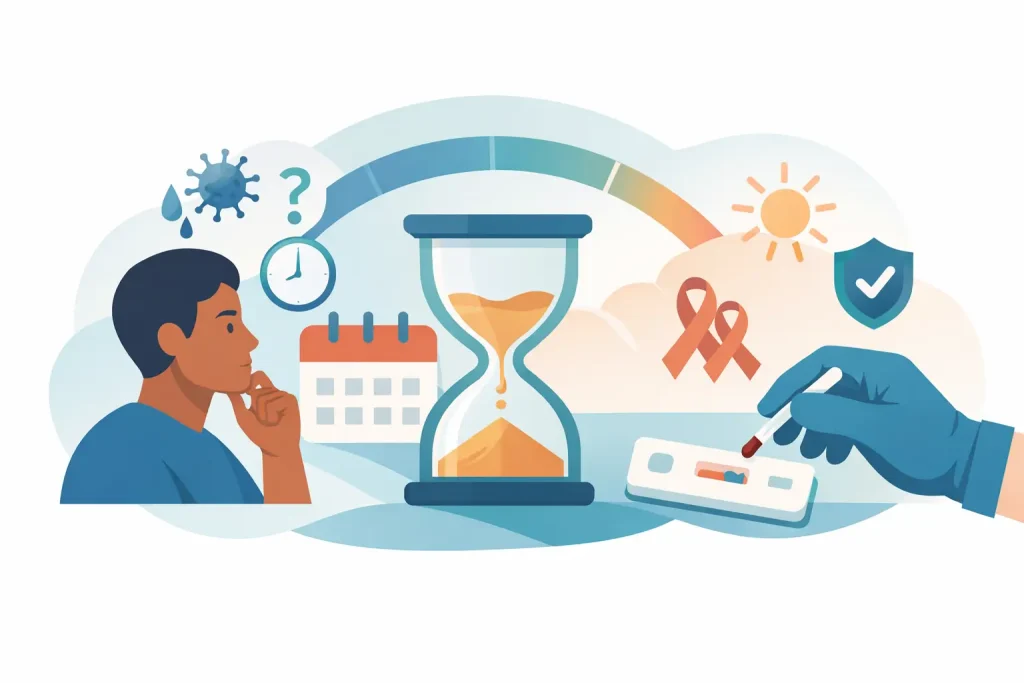
A negative HIV result can be reassuring, but its meaning depends on one detail: how long it has been since the possible exposure. The HIV window period is the time between exposure to HIV and the point at which a test can reliably detect infection. Testing too early may produce a negative result even if infection is present.
This is why the right question is not simply, “Should I get tested?” It is, “Which test is appropriate for the date of my exposure?” A confidential consultation can help you choose the correct test, understand what the result means, and avoid unnecessary waiting or repeat testing.
What is the HIV window period?
After HIV enters the body, it takes time for the virus itself, parts of the virus, or the antibodies made by your immune system to reach detectable levels. Different HIV tests look for different markers, so their window periods are not identical.
A test taken within the first few days after a risk event is unlikely to provide a definitive answer. That does not mean you should wait in silence, particularly if the exposure was recent. Prompt medical advice matters because HIV post-exposure prophylaxis, known as PEP, may be an option if started within 72 hours of a possible exposure.
The window period is measured from the most recent possible exposure. If there have been several encounters, a clinician will help establish the dates that matter and whether one test can answer the question or a follow-up test is needed.
HIV test windows: what each test can detect
The type of test used affects how soon HIV can be identified. A specialist clinic can advise which option is clinically suitable for your circumstances.
Nucleic acid testing
A nucleic acid test, or NAT, looks for HIV genetic material in the blood. It can identify infection earlier than standard screening tests, often around 10 to 33 days after exposure. It is not routinely needed for every patient, but it may be considered after a very recent high-risk exposure, where symptoms are concerning, or where a doctor needs earlier clarification.
Because it is a specialised test, it is usually interpreted alongside your exposure history and, where appropriate, other HIV tests. An early negative NAT result may still need follow-up depending on timing.
Laboratory fourth-generation HIV tests
A fourth-generation laboratory test checks for both HIV antibodies and p24 antigen, a protein associated with the virus that can appear before antibodies develop. This is widely used because it offers an effective balance of accuracy and earlier detection.
Many fourth-generation tests detect most infections from around 18 to 45 days after exposure. A negative laboratory fourth-generation result at 45 days is generally considered highly reliable, provided there has been no further exposure. Your doctor may still recommend a later test in particular situations, including use of PEP, uncertainty about exposure dates, or symptoms that need assessment.
Rapid and antibody tests
Rapid tests can give results quickly, often from a finger-prick blood sample. Some rapid tests detect antibodies only, while others may detect both antigen and antibodies. Their performance and window periods depend on the exact test used.
Antibody-only tests can take longer to become reliably positive, sometimes up to 90 days after exposure. A rapid result is useful and convenient, but it should always be interpreted in the context of when the exposure occurred. If you test very early, a negative result may be a starting point rather than the final answer.
When should you test after a possible exposure?
If the possible exposure was within the last 72 hours, seek medical advice immediately. Do not wait for symptoms or for an HIV test to become positive. PEP is a 28-day course of medication that can reduce the chance of HIV infection after a potential exposure, but it must be started as soon as possible and no later than 72 hours.
If more than 72 hours have passed, testing is still worthwhile. A clinician may arrange an initial test now, particularly if you have not had a recent baseline test, then advise the most appropriate follow-up date. This approach can reduce uncertainty while making sure the final result is meaningful.
As a practical guide, your testing plan may look like this:
- Within 72 hours: urgent assessment for PEP, plus baseline testing where appropriate.
- Around 2 to 4 weeks: an early assessment may be considered, particularly after a higher-risk exposure or if you are unwell.
- At 45 days: a laboratory fourth-generation test is usually highly reliable for a single exposure.
- At 90 days: antibody-based testing is generally considered conclusive, and may be advised after certain test types or clinical circumstances.
These timeframes are guides, not a substitute for individual medical advice. The type of sexual contact, whether a condom was used correctly, whether there was ejaculation, the HIV status and treatment status of a partner, and any use of PEP can all affect the assessment.
Do symptoms change the HIV testing window?
Not reliably. Some people develop flu-like symptoms two to four weeks after acquiring HIV, such as fever, sore throat, rash, swollen glands, tiredness, mouth ulcers, or muscle aches. Others have no symptoms at all. These symptoms are common in many viral illnesses and cannot diagnose HIV.
Equally, feeling completely well does not rule it out. Testing at the right time is more reliable than trying to interpret symptoms online or waiting for a particular sign to appear.
If you have fever, rash, swollen glands, a sore throat, or feel unwell following a recent possible exposure, tell the doctor when your symptoms began and when the exposure occurred. This helps determine whether an earlier specialist test or additional testing is appropriate.
What can affect the accuracy of an HIV test?
The most common reason for a misleading negative result is testing during the window period. It is also important to tell your clinician if you have taken PEP, are taking HIV prevention medication such as PrEP, have had a new exposure since your test, or have a condition or treatment that affects your immune system.
PEP and PrEP do not make testing pointless, but they can affect the testing pathway and timing of follow-up. Be open about any medicines taken. This information is handled confidentially and allows the doctor to give advice that is accurate rather than generic.
A positive screening result also requires careful handling. Modern HIV tests are highly accurate, but an initial reactive result is not the same as a confirmed diagnosis. Confirmatory testing is arranged before a diagnosis is made, and a doctor should explain each stage clearly and privately.
Why a full sexual health screen may be appropriate
A possible HIV exposure can also carry a risk of other sexually transmitted infections. Chlamydia, gonorrhoea, syphilis, hepatitis B, hepatitis C and herpes all have different testing windows, symptoms and treatment options. One test date may not suit every infection.
For example, chlamydia and gonorrhoea can often be detected earlier than some blood-borne infections, while syphilis may need repeat blood testing after a recent exposure. A tailored screen avoids the false reassurance of testing for only one infection at the wrong time.
At Klinik Bangsar South, consultations and testing are handled discreetly, with results explained in clear language rather than left for you to interpret alone. If follow-up testing is needed, you should leave knowing exactly when to return and why.
Take the next sensible step
An HIV window period can feel like a long wait, especially after an encounter you regret or do not fully understand. You do not need to guess which test to take or carry the anxiety alone. Seek prompt, confidential medical advice, share the dates honestly, and let the testing plan match your actual risk and timing.