A positive STI result can make the next conversation feel harder than the test itself. If you are wondering how to notify sexual partners, start with this: you do not need to have the perfect words, and you do not need to share every personal detail. You do need to give people enough information to seek testing or treatment promptly.
Partner notification is not about blame or proving where an infection came from. Many STIs cause no symptoms, can be present for some time, and may be passed on without either person knowing. Telling a partner is a practical act of care that protects their health and helps stop further transmission.
Notify sexual partners once you have clear medical advice
If your test result is positive, speak with a sexual health doctor before contacting partners where possible. Your doctor can confirm the diagnosis, explain whether treatment is needed, and advise which partners may need to be informed. This matters because the relevant time period differs between infections and depends on your symptoms, sexual history and test results.
For example, a recent partner may need testing after a diagnosis of chlamydia or gonorrhoea, while a longer look-back period may be appropriate for infections such as syphilis or HIV. Do not try to work this out from an internet checklist alone. A specialist can give advice that fits your situation.
If you have symptoms such as genital sores, unusual discharge, pelvic or testicular pain, fever, or a new rash, arrange medical assessment without delay. If you have already started treatment, ask when it is safe to have sex again. In many cases, you and any current partner should avoid sex until treatment has been completed and your doctor confirms it is appropriate to resume.
Decide who needs to know
The aim is to contact sexual partners who may have been exposed, not to revisit every relationship you have ever had. Your clinician can help you identify the appropriate period and discuss the type of sex involved, including oral, vaginal and anal sex. This conversation is confidential.
Current partners should be informed promptly, especially if you are likely to have sex again. Previous partners should also be told if they fall within the recommended timeframe. Even if the relationship ended badly or you no longer speak, notification gives that person the opportunity to be tested and treated.
There are situations where direct contact may not feel safe. If you are worried about anger, intimidation, violence, being outed, or repeated unwanted contact, do not put yourself at risk to deliver the message personally. Tell your doctor. Anonymous notification options or support through a sexual health service may be more suitable.
Choose the most private, practical way to tell them
There is no single right method. The best approach is the one that gets the information to your partner clearly and safely.
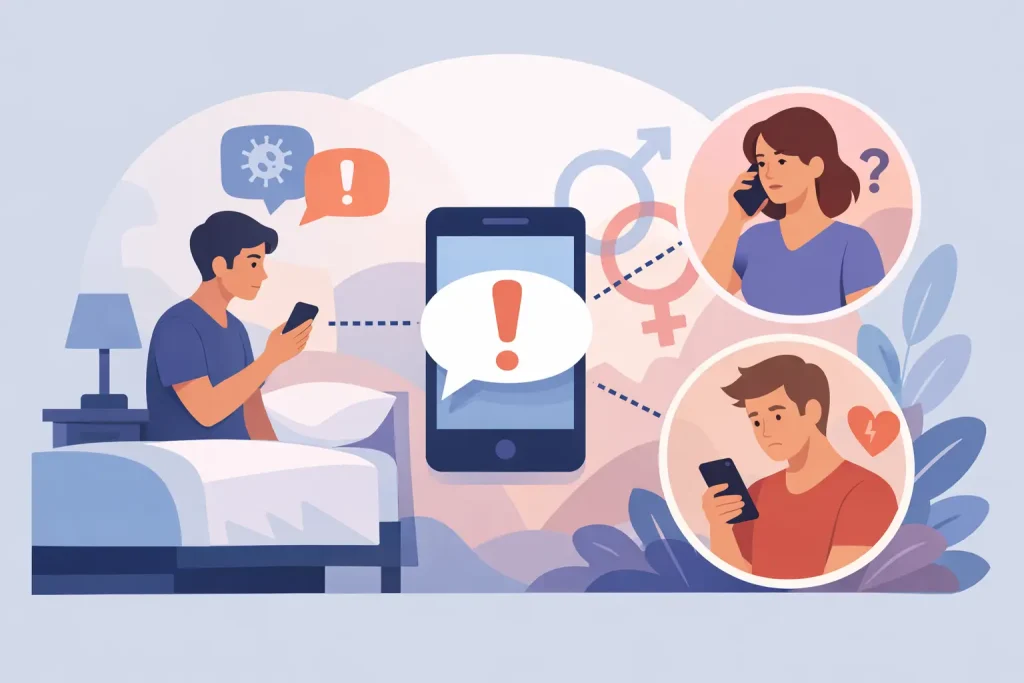
A face-to-face conversation may feel right with a current partner or someone you trust. It allows you to answer simple questions and agree on next steps. However, it is not required. A phone call can be more private and less emotionally intense. A message is often appropriate for a former or casual partner, particularly if you need to reach them quickly and do not expect an ongoing discussion.
Keep the message calm, factual and short. You do not have to disclose every detail of your test, your medical history, or other partners. In most cases, the key information is that they may have been exposed, they should arrange testing, and they should avoid sex or use protection until they have received medical advice.
You could say:
> “I wanted to let you know that I have been diagnosed with an STI. You may have been exposed, so please arrange an STI check-up as soon as you can. I am telling you because I want you to be able to get the right care.”
If you do not yet have a confirmed diagnosis but have been advised to test after a possible exposure, be honest about that instead:
> “I have had a possible STI exposure and am arranging testing. As we have had sex recently, I thought it was right to let you know so you can decide whether to get tested too.”
Avoid phrases that assign fault, such as “you gave this to me” or “I know it came from you”. Test results rarely establish exactly when or from whom an infection was acquired. Starting with an accusation can stop the person from hearing the health information they need.
Be ready for different reactions
People may respond with concern, embarrassment, frustration, disbelief or gratitude. Their reaction is not fully within your control. Your responsibility is to communicate the relevant health information respectfully.
If they ask questions you cannot answer, it is fine to say so. You might respond: “I do not know the exact timing. The doctor advised that recent partners should be tested.” Keep returning to the practical next step: testing and medical advice.
You are not required to debate your sexual history, defend your result, or remain in a conversation that becomes abusive. If the exchange turns hostile, end it. Save any messages only if you feel it is necessary for your own safety or record-keeping, then seek support from someone you trust or your healthcare provider.
Anonymous notification can be the right choice
Some people delay partner notification because they are afraid of being recognised, judged or confronted. That delay can leave another person untreated. If direct contact is not possible, anonymous notification may help.
An anonymous message can state that the recipient may have been exposed to an STI and should arrange testing, without identifying you. This is particularly useful for brief encounters, former partners, or circumstances where privacy and personal safety are concerns.
There is a trade-off. Anonymous messages can be ignored or mistaken for spam, and the recipient may not know which infection is involved. Where safe, a direct message is often clearer. But anonymous notification is still better than saying nothing when direct contact would expose you to risk or cause significant distress.
Encourage testing, not self-diagnosis
A partner may say they feel completely well. That does not rule out an STI. Chlamydia, gonorrhoea, syphilis, HIV and other infections can be asymptomatic, particularly in the early stages. Equally, a home remedy, leftover antibiotics or a quick online search is not a reliable substitute for proper testing.
Encourage them to see a reputable sexual health provider for the right tests and interpretation. The tests needed can vary according to the type of exposure and how recently it occurred. Some infections may not be detectable immediately, so a clinician may recommend repeat testing after a window period.
At Klinik Bangsar South, patients can discuss positive results and partner notification privately with experienced sexual health doctors. Fast, confidential testing is useful, but clear interpretation and a follow-up plan are just as important when you are deciding what to tell someone else.
Look after your own health as well
Notifying partners can bring up guilt, anxiety or shame, even when you have done nothing wrong. STIs are medical conditions, not a measure of your character. People can acquire them in long-term relationships, through a single encounter, or without any symptoms at all.
Follow your treatment plan exactly. Attend follow-up testing if advised, and ask about vaccinations or prevention options that may be relevant to you. If you have a current partner, consider attending appointments separately or together, depending on what feels comfortable and medically appropriate.
The most useful message is often the simplest one: there may have been an exposure, testing is recommended, and help is available. Sending that message may feel uncomfortable for a few minutes, but it gives someone the chance to protect their health and move forward with certainty.