A condom split. A new partner’s status is uncertain. You are replaying what happened and wondering what to do next. Knowing how to seek PEP care can turn a stressful few hours into a clear medical plan. PEP is time-sensitive HIV prevention treatment, so the priority is not to wait for symptoms, reassurance from online searches, or a partner’s test result.
What PEP is and when it may help
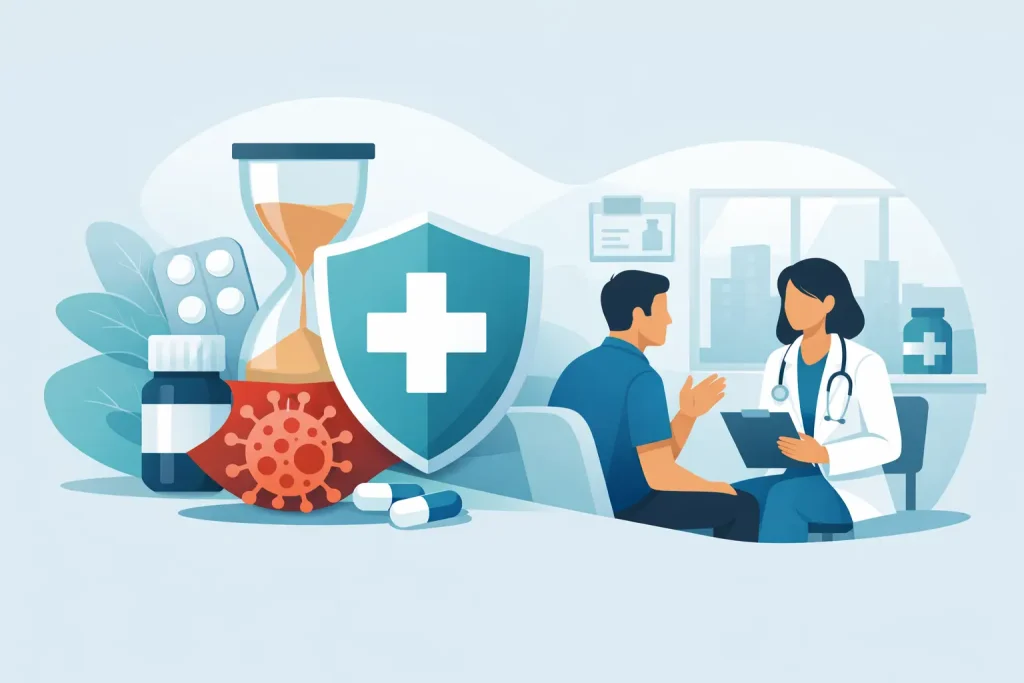
PEP stands for post-exposure prophylaxis. It is a course of HIV medicines given after a possible exposure to reduce the chance of HIV infection. It must be started as soon as possible and no later than 72 hours after the exposure. Earlier is better – ideally within the first 24 hours.
PEP is not needed after every sexual encounter. A clinician will assess the type of contact, whether a condom was used correctly, whether it broke or slipped, the timing, and any information available about your partner’s HIV status. This is a clinical risk assessment, not a judgement of you or your sexual history.
PEP may be considered after unprotected anal or vaginal sex, a condom failure during these activities, sharing injecting equipment, or sexual assault. Oral sex generally carries a much lower HIV risk, but circumstances vary. Blood exposure, genital sores, bleeding, ejaculation, and a known HIV-positive source who is not confirmed to have an undetectable viral load can all affect the assessment.
Do not decide that an exposure was harmless simply because you feel well. HIV usually causes no immediate symptoms after exposure, and PEP works by preventing infection before it becomes established.
How to seek PEP care without delay
Contact a sexual health clinic, private medical clinic, emergency department, or other service that can assess and prescribe PEP immediately. When you call or send a message, state clearly: “I may have had an HIV exposure and need an urgent PEP assessment.” This helps the clinic understand that timing matters.
Be ready to give the approximate time of the exposure and explain what happened as directly as you can. You do not need perfect details. If you are unsure whether penetration occurred, whether the condom failed, or whether there was contact with semen or blood, say so. Uncertainty is common and should be part of the assessment rather than a reason to delay care.
At Klinik Bangsar South, consultations and sexual health testing are handled privately, with one-to-one clinical guidance for patients who need prompt answers after a possible exposure. Discreet access can matter when you are concerned about being seen, but privacy should never mean postponing treatment.
If it is late at night, a weekend, or a public holiday, seek an urgent medical service rather than waiting for your usual clinic to open. The 72-hour limit is a maximum window, not a target. If you are approaching that point, attend urgently even if you are uncertain PEP is appropriate.
What happens at a PEP appointment
The first consultation is usually focused and practical. Your clinician will ask about the exposure, previous HIV tests, current medicines, allergies, medical conditions, and whether there is any possibility of pregnancy. They may also ask about hepatitis B vaccination and any previous sexually transmitted infections.
You will normally have a baseline HIV test before or at the point PEP is started. This test is essential, but it cannot rule out an infection from an exposure that happened only hours or days ago. Its purpose is to establish your HIV status before treatment and help your clinician plan follow-up safely.
Depending on your situation, the clinician may recommend tests for other infections, including syphilis, gonorrhoea, chlamydia, hepatitis B, and hepatitis C. Some tests may need repeating later because infections have different window periods. If pregnancy is possible, emergency contraception may also be discussed. PEP prevents HIV only; it does not prevent pregnancy or other STIs.
If PEP is recommended, you will be prescribed a 28-day course of antiretroviral medication. The first dose should be taken immediately once it is provided. Do not share medicines, use leftover tablets, or buy medication from an unverified source. The correct regimen and dose depend on your health, other medicines, and the latest clinical guidance.
Taking PEP properly for the full course
PEP is most effective when every dose is taken as prescribed for all 28 days. Set a daily alarm, keep the medicine somewhere private but visible, and plan ahead if you will be working late or travelling. Missing a dose does not automatically mean treatment has failed, but you should contact the prescribing clinician promptly for advice rather than guessing what to do.
Most people tolerate PEP well. Some experience short-term nausea, tiredness, headache, diarrhoea, or changes in sleep during the first few days. These effects are often manageable and should not lead you to stop treatment without medical advice. Your clinician can check for medicine interactions and suggest practical ways to reduce side effects.
While taking PEP and until follow-up is complete, use condoms consistently and avoid sharing injecting equipment. This protects you and others while your HIV status is being confirmed. If you have a regular partner, a clinician can advise on how to manage sex safely and discuss testing without making assumptions about your relationship.
Follow-up testing is part of PEP care
Finishing the tablets is not the final step. Follow-up appointments confirm that PEP has worked and allow time for tests for HIV and other infections to become accurate. The timing depends on the test used, the nature of the exposure, and your medical history, but clinicians commonly arrange repeat HIV testing after PEP and again at a later point, often around three months after the exposure.
Attend these appointments even if you have no symptoms. They are also a useful opportunity to discuss any new exposures, side effects, or concerns that emerged during treatment. A specialist can interpret results in context, including whether a result was taken within an appropriate testing window.
If your HIV test is positive at baseline or during follow-up, PEP is not the appropriate treatment pathway. Prompt specialist HIV care is still highly effective, and modern treatment allows people living with HIV to maintain their health and prevent sexual transmission when the virus is undetectable. This is why testing and medical follow-up matter.
PEP versus PrEP: knowing the difference
PEP is for an event that has already happened. PrEP, or pre-exposure prophylaxis, is preventive medication taken before potential HIV exposure. If you have needed PEP more than once, have partners whose HIV status is unknown, or regularly find yourself worried after sex, ask about PrEP once the immediate PEP process is complete.
PrEP is not a sign that you have done anything wrong. For many sexually active adults, it is a practical way to reduce anxiety and take greater control of HIV prevention. It still requires regular HIV testing and does not replace condoms for protection against other STIs.
Do not let embarrassment cost you time
People often delay PEP because they are worried about being judged, do not know a partner’s status, or hope the anxiety will pass. These feelings are understandable, but they should not decide your medical care. A PEP consultation is confidential and routine for an experienced sexual health clinician.
You do not need to prove that an exposure was high risk before seeking help. You only need to act quickly enough for a professional to assess it. If the exposure was within the last 72 hours, make the call now, describe what happened honestly, and let a qualified clinician guide the next step.