A possible HIV exposure can make even a short wait feel overwhelming. The right HIV test options depend less on anxiety or symptoms and more on when the exposure occurred, the type of test used, and whether there is a need for urgent treatment. A confidential consultation helps turn those uncertainties into a clear plan.
At Klinik Bangsar South, testing is handled privately, with one-to-one medical guidance and prompt interpretation of your result. There is no judgement, and no need to explain more than you are comfortable sharing. The clinical details that do matter – timing, protection used, symptoms and previous tests – are handled discreetly because they affect which test will give you a meaningful answer.
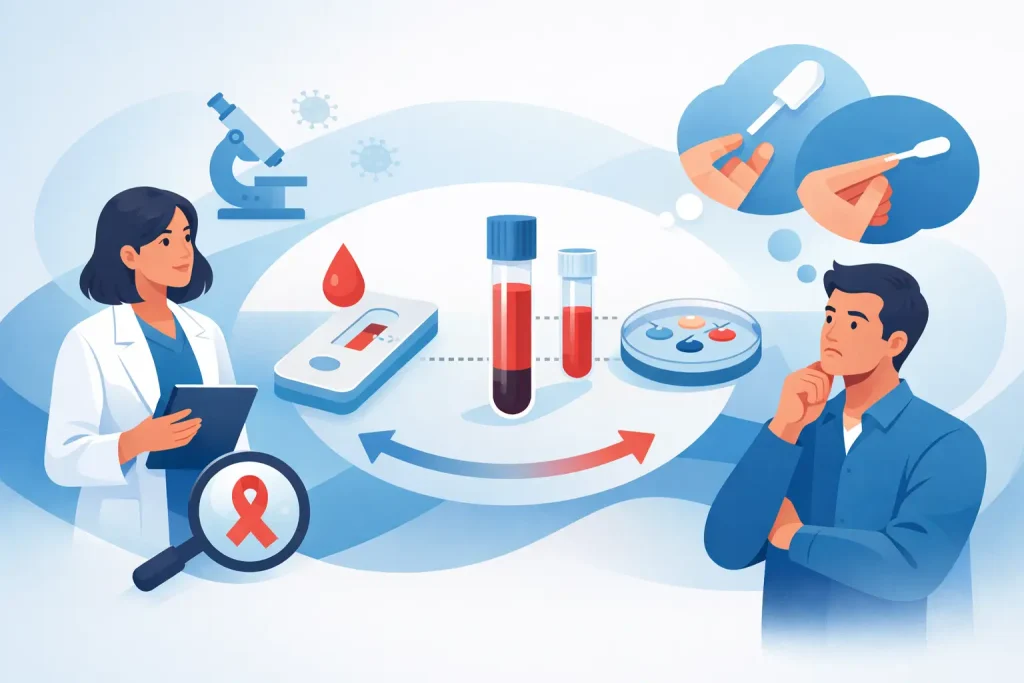
HIV Test Options and What They Detect
HIV tests do not all look for the same thing. This is why the test that is best one week after an encounter may not be the most suitable test several weeks later.
Fourth-generation HIV blood tests
A laboratory fourth-generation HIV test is often the preferred option after a recent possible exposure. It detects both HIV antibodies, which are produced by the immune system, and the p24 antigen, a protein that can appear earlier in infection.
Because it looks for two markers, it can identify many infections sooner than antibody-only tests. It is generally regarded as highly reliable from around 45 days after exposure, although a clinician may advise an earlier test for reassurance and a follow-up test at the appropriate window period. A blood sample is taken and sent for laboratory analysis, with results commonly available within 24 hours depending on the testing arrangement.
For patients who want a medically comprehensive answer and clear interpretation, this is often the most appropriate first-line test.
Rapid HIV tests
Rapid tests are designed to provide a result during the appointment or shortly afterwards. Many rapid tests detect antibodies, while some settings may use rapid antigen-antibody tests. The exact window period depends on the device, so it is essential not to assume that every rapid test can rule out a very recent exposure.
Rapid testing can be useful when you need an initial answer quickly, have not tested for some time, or are attending for broader sexual health screening. A negative rapid result may still need repeating if the exposure was recent. A doctor can explain whether the result is conclusive for your dates rather than leaving you to interpret a leaflet alone.
HIV RNA or NAT testing
HIV RNA testing, sometimes called nucleic acid testing or NAT, looks directly for genetic material from the virus in the blood. It may detect HIV earlier than antigen-antibody and antibody tests, often from roughly 10 to 14 days after exposure in some cases.
This option is not routinely necessary for every patient. It is usually considered when exposure was very recent and significant, when symptoms are clinically concerning, or when an earlier answer would change medical decisions. It can be more costly and must be interpreted carefully. A negative result taken too early may still require repeat testing, while a positive screening result always needs confirmatory assessment.
Self-tests and home sampling kits
Self-tests can offer privacy and convenience, particularly for people reluctant to visit a clinic. However, most are antibody-only tests and have a longer window period. A result is generally most dependable at 90 days after the last possible exposure, depending on the kit instructions.
A home test cannot assess symptoms, exposure risk or the possibility of other sexually transmitted infections. If the result is reactive, unclear, or taken before the full window period, do not panic and do not rely on it alone. Arrange confirmatory testing with a qualified clinician promptly.
When Should You Test After Possible Exposure?
Testing at the right time matters as much as choosing the right test. HIV may not be detectable immediately after exposure. This gap is known as the window period, and it varies by test type.
If the encounter happened within the last 72 hours, do not wait for a routine test alone. Seek urgent medical advice about post-exposure prophylaxis, known as PEP. This is a 28-day course of HIV medication that can reduce the chance of infection after a high-risk exposure, but it must be started as soon as possible and no later than 72 hours afterwards. Testing is still part of the process, but urgent assessment comes first.
For exposures more than 72 hours ago, a clinician may recommend a baseline test now, then repeat testing based on the test performed and your exposure date. A baseline result does not necessarily exclude an infection from a very recent encounter. It does, however, establish your status before that exposure and can provide a useful starting point.
Symptoms should not be used to judge whether you have HIV. Some people experience a fever, rash, sore throat, swollen glands, tiredness or muscle aches during early infection. Many people have no noticeable symptoms at all, and these symptoms can also be caused by common viral illnesses. Testing is the only reliable way to know.
Choosing the Right Test for Your Situation
The best choice depends on a few practical questions: when did the possible exposure occur, what happened, were condoms used, do you have symptoms, and have you had any more recent partners? This is why a brief consultation can be more valuable than simply selecting the fastest available test.
If exposure was within the past few days, an early assessment may focus on PEP eligibility, a baseline test and a follow-up schedule. If it was several weeks ago, a fourth-generation laboratory test will often provide the most useful answer. If it was more than three months ago, an antibody test or self-test may be sufficient in many cases, though a clinic blood test remains a sensible option if you want specialist advice or have ongoing risks.
You may also benefit from testing for other STIs. Chlamydia, gonorrhoea, syphilis, hepatitis B and hepatitis C each have different methods and window periods. A negative HIV result does not rule out these infections. Where exposure involved oral, vaginal or anal sex, the right screening may include urine, blood, vaginal, throat or rectal samples depending on the contact involved.
What Does a Positive or Negative Result Mean?
A negative result is reassuring only when it is taken after the relevant window period and there has been no later exposure. If your test was performed early, the clinician should tell you exactly when to repeat it. This clarity avoids the common mistake of retesting repeatedly without knowing whether a result is yet conclusive.
A reactive or positive screening result is not the same as a final diagnosis. Further confirmatory laboratory testing is required. While waiting for confirmation, avoid sharing needles and use condoms or avoid sex until you have received medical advice. Modern HIV treatment is highly effective, and early diagnosis allows treatment to begin promptly, protects long-term health and prevents onward transmission when the virus becomes undetectable.
If the result is negative but you have regular new partners or ongoing risk, consider a routine testing schedule. Some people may also be suitable for pre-exposure prophylaxis, known as PrEP, which is medication used to prevent HIV before potential exposure.
Private Testing Without Added Stress
For many people, the hardest part is not the blood test. It is worrying about being recognised, judged, or left alone with a result they do not understand. Private sexual health care should reduce that pressure.
A specialist-led appointment gives you space to discuss the details confidentially, choose appropriate HIV test options and receive practical next steps. Discreet access, hidden parking and prompt results can make a difficult appointment feel more manageable, particularly when you need answers without delay.
If you have had a possible exposure, choose a test based on the date and circumstances rather than guesswork. A calm, confidential medical conversation can give you a clear testing timeline and the reassurance of knowing what to do next.