A new blister, ulcer, cut or painful area around the genitals can cause immediate worry. Genital sore tests are most useful when the sore is still present, particularly if it is new, open or fluid-filled. Prompt assessment gives your doctor the best chance of identifying the cause and advising you clearly on treatment, sexual contact and partner care.
A genital sore does not automatically mean you have an STI. Skin irritation, shaving injury, dermatitis and friction can all cause changes that look concerning. However, herpes and syphilis are important causes to rule out, and guessing from appearance alone is not reliable. A private consultation allows the area to be examined discreetly and the right tests to be taken without delay.
When should you arrange genital sore tests?
Arrange an appointment as soon as you notice a sore, blister, ulcer, crusted patch or unexplained genital rash. Do not wait for it to become more painful or assume it will settle on its own. Herpes swabs are most accurate when collected from a fresh lesion, before it has started to heal.
You should also seek testing promptly if a sore appears after sex with a new partner, unprotected vaginal, anal or oral sex, or contact with someone who has an STI. A painless sore can still require urgent attention. Syphilis sores are often painless and may disappear without treatment, but the infection remains in the body and can progress if it is missed.
If you have fever, swollen groin glands, widespread rash, severe pain, difficulty passing urine, or you are pregnant, do not delay assessment. These symptoms may affect the urgency of treatment and the tests your doctor recommends.
What happens during a private genital sore consultation?
The first step is a confidential discussion with an experienced doctor. You may be asked when the sore appeared, whether it hurts or itches, whether you have had previous episodes, and what sexual contact took place before symptoms began. These questions are clinical, not judgemental. They help narrow down the likely causes and prevent unnecessary testing.
Your doctor will then examine the affected skin, only with your consent and with appropriate privacy. The appearance and location of a sore can provide useful clues, but testing is usually needed for a reliable diagnosis.
At Klinik Bangsar South, consultations and testing are handled privately, with discreet access and direct discussion of your results with a doctor. This is particularly valuable when symptoms are causing anxiety and you need a clear plan rather than a general explanation.
Which tests may be needed for genital sores?
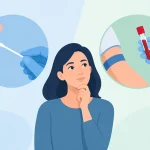
The right test depends on whether a lesion is present, how long it has been there and your recent exposure. In many cases, testing involves a simple swab from the sore and a blood sample. It is usually quick, although an open or very tender ulcer may feel briefly uncomfortable during swabbing.
Herpes swab test
A swab is commonly used to test a fresh blister, ulcer or raw area for herpes simplex virus, including HSV-1 and HSV-2. This is often a PCR test, which looks for viral genetic material. It is more useful than a blood test for confirming whether a current sore is caused by herpes.
Timing matters. If the lesion has completely healed, there may be nothing suitable to swab. If you can attend while a blister or ulcer is active, the result is more likely to provide a clear answer.
Syphilis blood test
Syphilis can cause a single painless ulcer, but symptoms vary considerably. A blood test checks for evidence of syphilis infection. In some early cases, blood results can still be negative shortly after exposure or at the very beginning of symptoms. Your doctor may advise a repeat test if the timing is too early or the clinical suspicion remains high.
Where appropriate, a sample from the lesion may also be considered. The exact approach depends on the examination findings and available diagnostics.
HIV and wider STI screening
A genital ulcer can increase the risk of acquiring or transmitting HIV, so HIV testing is often recommended as part of the assessment. Depending on your sexual history, your doctor may also recommend tests for gonorrhoea and chlamydia from urine, vaginal, throat or rectal samples.
These infections do not usually cause a typical genital ulcer, but they can occur at the same time and may have no symptoms. A targeted screen avoids leaving a second infection undetected.
Testing for other skin conditions
Not every sore is caused by herpes or syphilis. Conditions such as folliculitis, fungal skin irritation, eczema, fixed drug reactions, bacterial infection and traumatic skin injury can sometimes resemble an STI. Less commonly, conditions including mpox or other viral infections may need consideration based on symptoms and exposure.
This is why an examination by a doctor matters. A test panel should be tailored to your symptoms, not selected at random.
Can you test after the sore has healed?
Yes, but the testing strategy changes. Once a sore has healed, a herpes swab may no longer be possible. Blood tests can still be useful for infections such as syphilis and HIV, although they have window periods. A window period is the time between an exposure and the point at which a test can detect infection reliably.
A doctor can advise whether to test immediately, repeat a blood test later, or both. This is especially relevant if the sore lasted only a few days, you used antiviral medication before attending, or the possible exposure was recent.
Herpes antibody blood tests require careful interpretation. A positive result may show previous exposure but may not confirm that a recent sore was caused by herpes, identify the location of infection, or establish when it was acquired. For that reason, a lesion swab is generally preferred when symptoms are present.
What to do before your appointment
Try not to apply creams, antiseptics or antiviral treatment directly to the sore before you are assessed unless a doctor has already advised you to do so. These can sometimes affect the appearance of the lesion or reduce the chance of detecting an infection from a swab.
Avoid sexual contact, including oral sex, until you have been examined and advised on the next steps. Condoms reduce STI risk but may not fully protect against infections spread through skin-to-skin contact around uncovered areas, including herpes and syphilis.
If you have a visible lesion that is changing quickly, a clear photograph taken when it first appeared can sometimes help your doctor understand its progression. Do not rely on photographs alone, however. An in-person assessment remains the safest way to decide which tests are needed.
How quickly are results available?
Some genital sore test results can be available quickly, while others require laboratory processing. Turnaround depends on the test requested, the sample type and when the sample reaches the laboratory. Your doctor should explain which results may be available within 24 hours and which may take longer.
Fast results are helpful, but accuracy matters more than rushing into the wrong conclusion. If results are negative but the sore strongly suggests an infection or testing was done early, repeat testing or follow-up may be recommended. This is a normal part of careful sexual health care, not a reason to panic.
If a test is positive
Most causes of genital sores can be treated or managed effectively. Syphilis requires prompt antibiotic treatment and follow-up blood tests. Herpes can be managed with antiviral medication to shorten outbreaks, reduce discomfort and lower the chance of passing the virus on. Your doctor can also advise whether partners should be informed, tested or treated.
A positive result can feel personal, but it is medical information, not a judgement. The most useful next step is a calm discussion about treatment, partner protection and what your result means in your individual circumstances.
If you have a genital sore now, do not wait for certainty before seeking care. Testing while symptoms are present can replace worry with a specific answer and a practical next step.