A new blister, sore, itch or tingling sensation can make the question feel urgent: herpes swab versus blood test – which one should you have? The answer depends mainly on whether there is a fresh visible lesion to test, how long ago a possible exposure occurred, and what you need the result to tell you. Choosing the wrong test at the wrong time can lead to a result that is less useful than it should be.
Herpes simplex virus (HSV) is common and manageable, but testing needs careful interpretation. A private consultation allows your doctor to assess the skin changes, your symptoms, timing and sexual history before recommending the most appropriate test.
Herpes swab versus blood test: the key difference
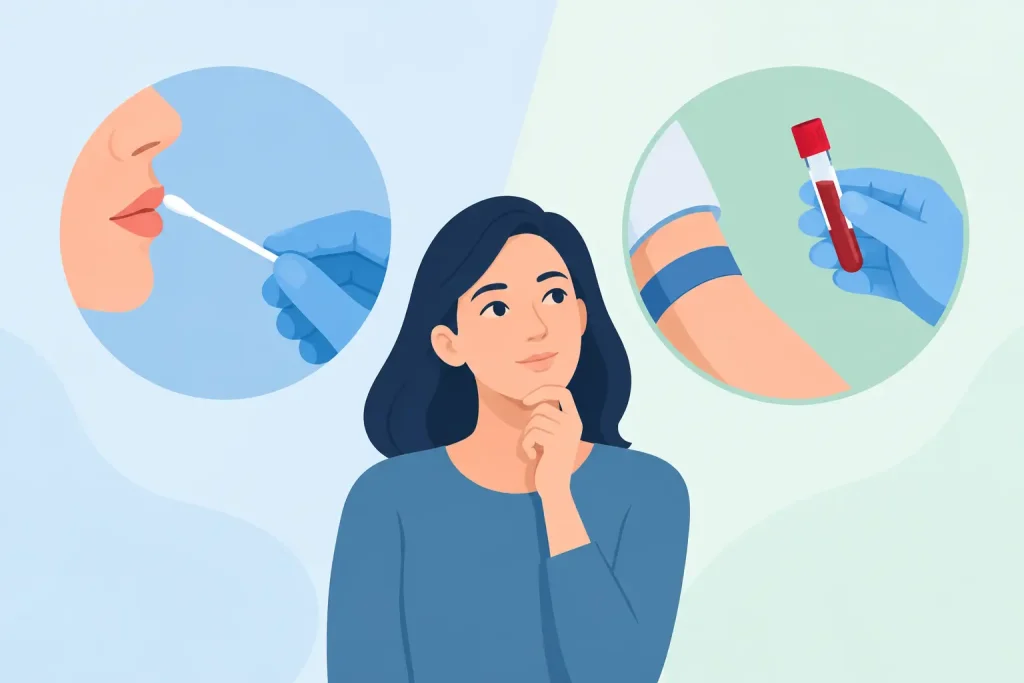
A herpes swab looks directly for the virus in a blister, ulcer or sore. A blood test looks for antibodies made by your immune system after exposure to HSV. These tests answer different clinical questions, so one is not automatically better than the other.
If you have a new or active lesion, a swab is usually the preferred test. It can confirm whether HSV is present in that particular sore and, with modern PCR testing, identify whether it is HSV-1 or HSV-2. This matters because it gives a clearer explanation for the symptoms you are experiencing now.
If you do not have a sore to swab, a type-specific HSV blood test may be considered. It can show whether you have developed antibodies to HSV-1, HSV-2 or both. However, it cannot tell where on the body the infection is located, when it was acquired, or whether it is responsible for current symptoms.
When a herpes swab is the better choice
A swab is most useful when there is a visible lesion that is recent, open or still moist. Ideally, this should be done as soon as possible after blisters, ulcers or sores appear. As lesions begin to heal, dry up or form a scab, the amount of virus available to detect can fall.
PCR swab testing is highly sensitive when the sample is taken correctly from a suitable lesion. It is often the fastest route to a clear diagnosis if you have pain, burning, blisters, genital ulcers, anal sores, or sores around the mouth. A clinician can also check whether another condition, such as syphilis, shingles, folliculitis or a skin irritation, could be causing similar changes.
A positive swab provides strong evidence that HSV is causing that lesion. A negative swab is reassuring, but it does not always completely rule out herpes. The result may be negative if the sore is already healing, if the sample was taken late, or if there was too little virus in the sample. This is why examination and timing matter.
What happens during a swab test?
The clinician gently rubs a small swab over the base of the lesion. It may feel briefly uncomfortable, particularly if the area is tender, but it is usually quick. There is no need to wait for a blood test if you currently have a fresh sore – getting it swabbed promptly is often the most useful next step.
When a herpes blood test may help
A blood test is more relevant when there are no visible sores to test. For example, you may have had a partner diagnosed with herpes, had a past episode of symptoms that has now fully resolved, or want to discuss your HSV status after a possible exposure.
The commonly used blood test is a type-specific IgG antibody test. It looks for antibodies that develop after infection. These antibodies do not appear immediately. Testing too soon after exposure can produce a negative result even if infection has occurred.
For the most reliable interpretation after a recent exposure, doctors may advise waiting around 12 to 16 weeks before relying on an HSV IgG blood test. The right timing varies between individuals and depends on your symptoms, exposure date and whether you have had herpes previously.
A positive HSV-2 antibody result usually indicates genital infection, although a doctor should still interpret it in context. HSV-1 is more complicated because it is very common and may reflect a previous oral infection acquired years earlier, sometimes in childhood. An HSV-1 blood result alone cannot confirm genital herpes.
For this reason, a blood test is not generally the first choice for diagnosing a new genital sore. If there is something to swab, testing the lesion can give more direct and actionable information.
Why timing can change your result
Testing for herpes is not simply a matter of taking any test after any encounter. The window period is different for swabs and blood tests.
A swab works best early in an outbreak, when viral shedding from the lesion is highest. Do not wait for a sore to become severe before seeking assessment. Antiviral medication can also be most effective when started early, particularly during a first episode.
A blood test needs time for antibodies to develop. Taking it only a few days or weeks after a possible exposure may not answer the question you are worried about. If a test is done early, a doctor may recommend repeat testing later, or advise a swab immediately if symptoms appear.
It is also possible to carry HSV without noticeable symptoms. That does not mean a person has done anything wrong or that transmission is inevitable. It means the result needs a calm, informed conversation about symptoms, partner communication and sensible ways to reduce transmission risk.
Tests that are less useful for herpes
Not every test advertised as a herpes test has the same clinical value. HSV IgM blood tests are generally not recommended for diagnosing herpes. They may be inaccurate, can react with other herpes viruses, and cannot reliably distinguish a new infection from an old one.
A general STI screen may not include herpes testing unless it is specifically requested or clinically indicated. This is not an oversight. Herpes testing is best selected based on symptoms, exposure and the limits of each test, rather than added automatically without discussion.
Home sampling kits may suit some people, but they can be less helpful when a clinician needs to examine a lesion, take a good-quality swab, assess other possible causes, or begin treatment promptly. If you are anxious, in pain or unsure what you are seeing, an in-person assessment is often the clearer route.
What your result can and cannot tell you
A positive lesion swab can confirm HSV and identify the type. It does not always reveal when you acquired it, because herpes can remain inactive before symptoms appear. A first recognised outbreak is not always a newly acquired infection.
A positive blood test shows prior exposure and antibody development, but it cannot identify the date of infection, the source, or the site of infection. This is particularly relevant for HSV-1. It should never be used alone to make assumptions about a partner or the timing of a relationship.
A negative result also needs context. A negative swab from a healing lesion and a negative blood test taken too early have different meanings. Specialist interpretation helps prevent false reassurance and unnecessary alarm.
Choosing the right next step
If you have a fresh blister, sore or ulcer, arrange an appointment promptly for an examination and herpes PCR swab. Avoid applying creams directly to the lesion before assessment unless a doctor has advised you to do so. Avoid sexual contact, including oral sex, while a possible herpes lesion is present.
If you have no symptoms but are concerned after exposure, discuss the dates and type of contact with a clinician before testing. You may need a type-specific HSV blood test at the right time, rather than an immediate test that cannot yet provide a dependable answer.
If you have severe pain, difficulty passing urine, widespread sores, fever, are pregnant, or have a weakened immune system, seek medical care urgently. These situations require timely assessment and treatment.
At Klinik Bangsar South, consultations and STI testing are handled privately, with clear advice on which test is appropriate and what your result means. A prompt, properly timed test can replace uncertainty with a practical plan for your health and your partners.