
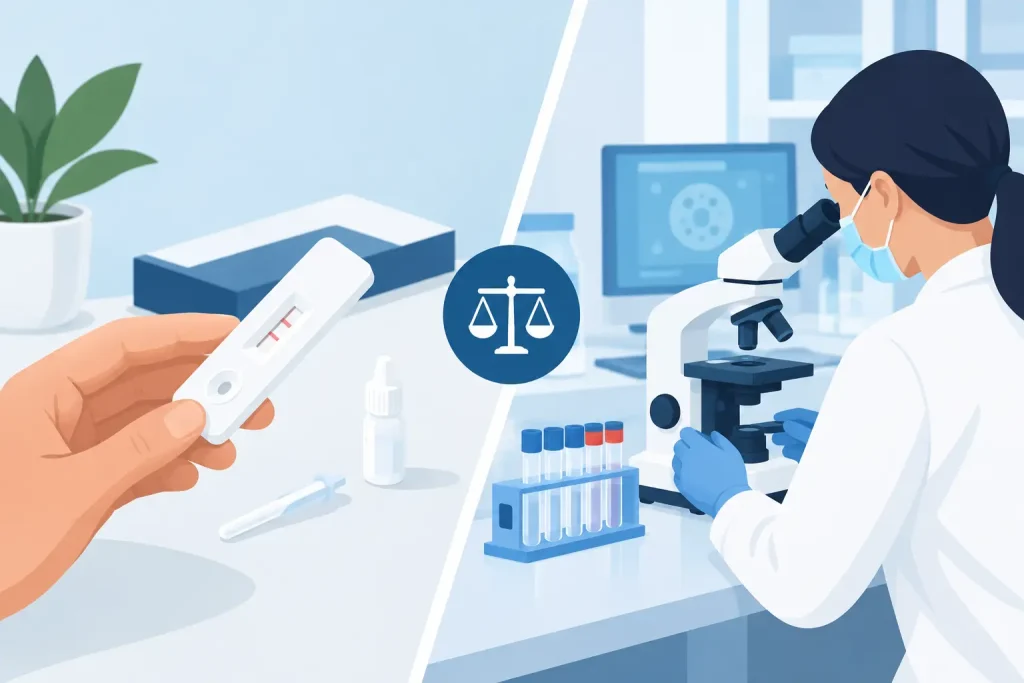
A worrying symptom, a new sexual partner, or sex without a condom can make waiting for answers feel difficult. When comparing a rapid STD test vs standard lab test, the right choice is not simply the fastest option. It depends on what infection may be involved, when the exposure happened, whether you have symptoms, and what result is needed to guide treatment safely.
For many people in Kuala Lumpur, privacy matters just as much as speed. A confidential appointment with an experienced sexual health doctor can replace uncertainty with a clear testing plan, prompt results where appropriate, and proper interpretation of what those results mean.
Rapid STD test vs standard lab testing
A rapid test is designed to provide a result during your visit or within a short time, often from a finger-prick blood sample, swab, or urine sample. The exact turnaround depends on the test and clinic process. Rapid testing is commonly used for selected infections, particularly HIV and sometimes syphilis, where an initial result can be available quickly.
Standard laboratory testing sends a sample to an accredited laboratory for analysis. It may use more sensitive methods, such as nucleic acid amplification testing (NAAT), which detects genetic material from an infection. This is widely used for chlamydia and gonorrhoea testing from urine or swab samples. Blood tests processed in a laboratory may also assess HIV, syphilis, hepatitis B, hepatitis C, and other infections depending on the panel selected.
Neither route is automatically better. Rapid tests can reduce the anxiety of waiting and help a doctor make timely decisions. Standard laboratory tests can offer the right method for infections that need a more detailed analysis. In many cases, a doctor may recommend both – a rapid test for an immediate indication and laboratory testing for confirmation or a broader screen.
The key difference is not only speed
It is understandable to focus on how quickly a result arrives. However, test performance and timing matter more than a same-day answer that is taken too early to be reliable.
Every STI has a window period. This is the period between exposure and the point at which a test can reliably detect the infection. During this time, a person may have an infection but receive a negative result because there is not yet enough detectable virus, bacteria, antigen, or antibody in the sample.
For example, a laboratory HIV antigen/antibody blood test generally identifies infection earlier than some rapid antibody-focused tests. Chlamydia and gonorrhoea may be detectable relatively soon after exposure, but testing immediately afterwards can still be too early. Syphilis blood tests may also need repeat testing if exposure was recent. A clinician should advise on the appropriate timing based on your individual situation rather than relying on a single general rule online.
Symptoms can change the approach. If you have discharge, pain when passing urine, sores, blisters, a rash, unusual bleeding, pelvic pain, or testicular discomfort, do not wait for a routine screening date. You may need an examination, targeted swabs, urine testing, blood tests, or treatment decisions on the day. Some infections are best diagnosed by testing an active sore or lesion, not by a blood test alone.
When a rapid test may be the sensible choice
Rapid testing can be useful when you need an initial answer promptly, particularly if there has been a potential HIV exposure, you are feeling highly anxious, or a clinician needs to make an immediate assessment. It can also be valuable for people who may struggle to return for results or follow-up.
A negative rapid result can be reassuring when the test has been performed after the relevant window period. Yet a negative result should never be interpreted without considering the date of exposure. If testing occurred too soon, your doctor may advise a repeat laboratory test at a later date.
A reactive rapid result is not necessarily a final diagnosis. Screening tests are designed to identify results that need further investigation. Depending on the infection and test type, a reactive result may require confirmatory laboratory testing before a diagnosis is confirmed and treatment is planned. This is a normal part of careful sexual health care, not a reason to panic.
Rapid testing is therefore most helpful when it is part of a medical consultation, rather than a standalone result received without context.
When standard laboratory testing is more appropriate
A standard lab test is usually the better route for a comprehensive STI screen. It allows the doctor to select samples and methods suited to your exposure, symptoms, anatomy, and sexual practices.
For chlamydia and gonorrhoea, a urine sample may be appropriate for some patients, but it is not always enough. If you have had oral or anal sex, throat or rectal swabs may be needed because infections at these sites can be present without symptoms and may not appear in a urine test. A targeted laboratory panel can reduce the risk of missing an infection simply because the wrong site was tested.
Laboratory testing is also useful when symptoms suggest conditions that do not have a suitable rapid test. Genital herpes, for instance, is most accurately assessed by swabbing a fresh lesion. Trichomoniasis, Mycoplasma genitalium, and certain causes of genital irritation may require specific laboratory tests rather than a general rapid screen.
If you have previously tested positive, have taken antibiotics recently, are pregnant, have a partner with a confirmed STI, or have ongoing symptoms despite a negative test, a more detailed laboratory approach is particularly important. These situations need clinical judgement, not a one-size-fits-all panel.
Accuracy depends on the test and the sample
Patients often ask which option is more accurate. The honest answer is that accuracy depends on the infection being tested, the technology used, the stage of infection, and whether the right sample was collected correctly.
A high-quality rapid test used at the right time can be highly reliable. A laboratory test is not automatically infallible if it is taken during a window period or from the wrong body site. Equally, a laboratory method may be more sensitive for some infections and is often needed to confirm a reactive screening result.
This is why a specialist-led consultation matters. The value is not only in receiving a report. It is in understanding whether your test answers the question you are asking: did it test for the infections relevant to your exposure, was it performed at the correct time, and do you need repeat testing?
Avoid choosing a test based solely on a package name such as “full screen”. The contents of STI panels vary considerably. Ask which infections are included, what samples will be taken, when results are expected, and whether post-result medical advice is included.
Privacy, results, and what happens next
Sexual health testing should feel straightforward and discreet. A private clinic should explain the process clearly, handle your information confidentially, and give you a direct route to a doctor if a result is positive, unclear, or needs repeating.
At Klinik Bangsar South, testing is approached as a private medical consultation rather than a transaction. Your doctor can discuss the exposure without judgement, assess symptoms, recommend appropriate rapid or laboratory tests, and explain the results in plain language. This is especially useful if you are unsure what to tell a partner or whether treatment is needed.
If a test confirms an STI, early treatment can protect your health and reduce the chance of passing the infection on. Some infections are cured with antibiotics, while others can be managed effectively with ongoing care. Your clinician can also advise on partner testing, avoiding sex until it is safe to resume, and any follow-up testing required.
How to decide before booking
Start with the date and nature of the exposure. Think about whether sex was vaginal, oral, or anal; whether condoms were used; whether you have symptoms; and whether a partner has received a diagnosis. These details help determine which tests are clinically appropriate.
If the exposure was very recent, ask whether testing now will provide a useful baseline and when repeat testing may be required. If you have symptoms, request a prompt assessment rather than waiting for a convenient date. If you need answers quickly, ask which results can be available on the day and which require laboratory processing.
Do not let embarrassment delay care. Most STI concerns are common, manageable, and easier to deal with when assessed early. The most useful test is the one chosen at the right time, from the right sample, with a doctor available to help you act on the result.