A sexual health concern can feel urgent long before you have clear answers. This guide to syphilis screening explains what testing involves, when results are most reliable, and why a prompt, private consultation is worthwhile after a possible exposure – even when you feel completely well.
Syphilis is a bacterial sexually transmitted infection that can be treated effectively with the right antibiotics. The difficulty is that its signs can be mild, mistaken for something else, or absent altogether. Screening gives you a reliable way to move from worry and uncertainty to a clear medical plan.
Who should consider syphilis screening?
Syphilis can pass through vaginal, anal or oral sex, and through close skin-to-skin contact with an infectious sore. It can affect anyone who is sexually active. Testing is sensible after sex without a condom with a new or unknown-status partner, if a partner has told you they have an STI, or if you have had several recent partners.
You should also arrange screening if you notice a painless sore, ulcer, unusual rash, swollen glands, or unexplained flu-like symptoms after sexual contact. A syphilis sore may occur on the genitals, anus, lips or inside the mouth, so it is not always easy to see. A rash can appear later, sometimes on the palms of the hands or soles of the feet, but symptoms vary considerably.
No symptoms does not mean no infection. Many people only discover syphilis through a routine sexual health check. Regular screening can be particularly useful for people with new partners, men who have sex with men, people living with HIV, and anyone whose sexual circumstances create an ongoing risk of exposure.
Pregnancy is another important reason to test promptly. Untreated syphilis can be passed to a baby during pregnancy, so early diagnosis and treatment are essential.
Guide to syphilis screening: what the test looks for
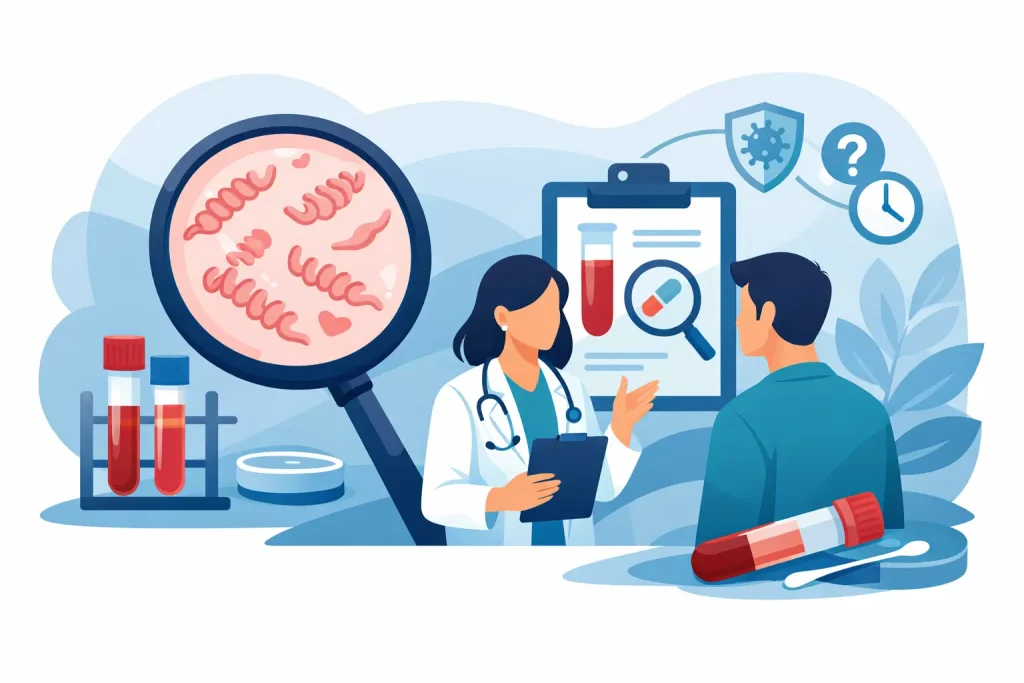
Syphilis screening is usually a blood test. Laboratories commonly use two types of blood test together: a treponemal test and a non-treponemal test.
A treponemal test looks for antibodies produced in response to the syphilis bacterium. Once positive, it can remain positive for many years, sometimes for life, even after successful treatment. It helps show whether there has ever been an infection, but it does not by itself tell a doctor whether that infection is active now.
A non-treponemal test, often reported as an RPR or VDRL result, measures a different antibody response. Its level, or titre, can help assess whether infection is active and can be followed after treatment to confirm that the response is appropriate. Interpreting the two tests together matters. A result should not be treated as a simple positive-or-negative label without considering your history, symptoms, previous treatment and timing of exposure.
If you have a visible sore that could be syphilis, a clinician may recommend examining it and, where available and appropriate, taking a sample for direct testing. This can sometimes identify infection before blood antibodies have developed. Do not apply creams or try to treat an ulcer yourself before an assessment unless advised by a doctor, as this can make diagnosis more difficult.
When is the right time to test?
The timing of a syphilis test depends on when the possible exposure occurred. Blood tests do not necessarily turn positive immediately after infection. Antibodies usually take time to develop, which means a test taken very soon after exposure may be reassuring but not final.
If you have symptoms now, do not wait for a theoretical testing window. Arrange a consultation as soon as possible. An examination and targeted testing may be more useful than waiting at home for a blood test to become conclusive.
If you do not have symptoms, a clinician may advise an initial baseline blood test followed by repeat testing at a later date. The exact schedule depends on the type and date of contact, whether your partner has confirmed syphilis, whether protection was used, and whether you have had previous syphilis treatment. Repeat testing around six weeks and again at three months may be advised in some situations, but your doctor should tailor this to your individual risk.
Testing early still has value. It establishes your starting point, checks for infections that may already be detectable, and gives you a clear plan for any follow-up. It is far better than waiting for symptoms that may never appear.
What happens at a private appointment?
A discreet sexual health appointment should be straightforward. You will usually be asked a few focused questions about your recent sexual contact, symptoms, previous STI tests and any past treatment for syphilis. These details are medical information, not a judgement. They allow the doctor to select the right tests and advise on the right timing.
The blood sample itself takes only a few minutes. Depending on your circumstances, screening for HIV, gonorrhoea, chlamydia, hepatitis B and hepatitis C may also be discussed. These infections can share routes of transmission, and a complete assessment can avoid the false reassurance of checking only one condition after a higher-risk encounter.
At Klinik Bangsar South, consultations and testing are handled privately, with specialist-led interpretation rather than a result handed over without context. Many routine results are available within 24 hours, although turnaround can vary by test and any confirmatory laboratory work required. Private access and discreet parking can make it easier to seek care without adding to an already stressful situation.
Understanding a positive, negative or unclear result
A negative result is reassuring only when it is taken at the right point after exposure. If your test was very early, you may need a repeat test even if you feel well. Continue to follow the plan given by your clinician rather than relying on a single early result.
A positive result does not automatically tell you when you acquired syphilis. It may reflect a current infection, a previously treated infection, or occasionally a result that needs further confirmation. Your doctor will review the pattern of results alongside your history and may arrange additional testing before deciding on treatment or follow-up.
If active syphilis is diagnosed, treatment is usually highly effective. The antibiotic and number of doses depend on the stage of infection and your medical circumstances. Early syphilis is often treated with an injection of penicillin, while later or unknown-duration infection may require a different course. People with a penicillin allergy, pregnancy, neurological symptoms or eye symptoms need especially careful specialist assessment.
Do not have sex until your clinician advises that it is safe to do so. Partners may need testing and, in some cases, treatment even if they have no symptoms. This is not about blame. It is how reinfection and further transmission are prevented.
Why follow-up matters after treatment
Finishing treatment is not always the final step. Repeat blood tests are used to check that the non-treponemal titre falls as expected. This helps confirm a treatment response and can identify possible reinfection or the need for further review.
Some people experience fever, headache, muscle aches or a temporary worsening of symptoms within 24 hours of treatment. This can be a Jarisch-Herxheimer reaction, caused by the body responding to the dying bacteria. It can feel unpleasant but is usually short-lived. Contact your doctor promptly if you are concerned, and seek urgent care for severe symptoms, difficulty breathing, eye pain or changes in vision, weakness, severe headache, confusion, or new hearing problems.
Syphilis is treatable, but delaying assessment can allow it to progress and create avoidable risks for you and others. A confidential blood test and an experienced conversation can replace speculation with a clear next step – and that is often the most reassuring place to begin.